


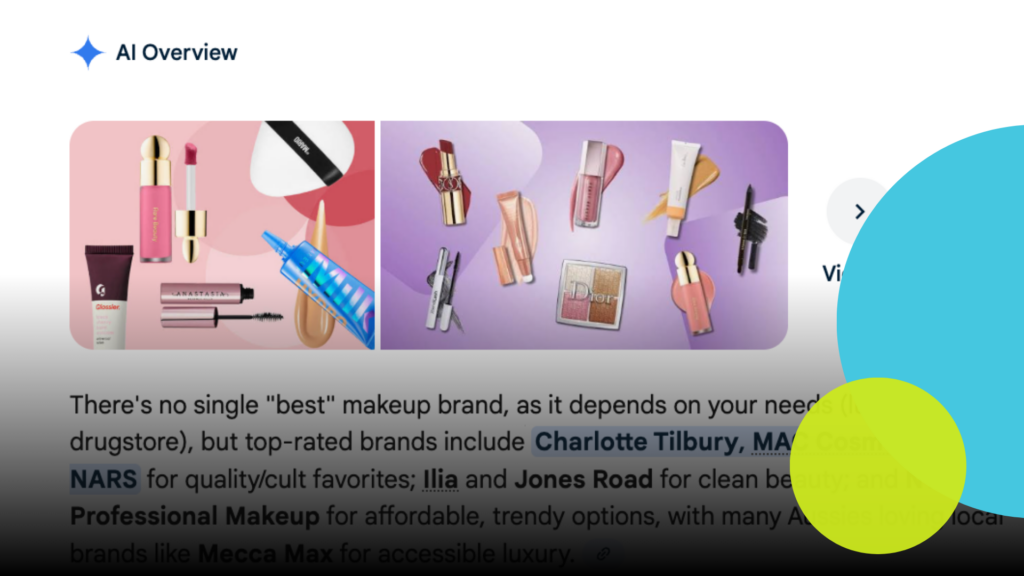
Online shopping in 2026: See it. Like it. Buy it.
AI is collapsing the path to purchase faster than most brands are ready for. Product discovery is happening inside AI summaries, social feeds, and recommendation engines long before someone lands on a website. Decisions are being shaped in seconds, sometimes without a click, and increasingly without a traditional “funnel” at all.
From the outside, it looks like frictionless commerce at its peak.
From a marketing perspective, it’s something else entirely.
Because while AI is accelerating buying decisions, it hasn’t replaced the one thing that actually determines long-term success: trust.
And in a world where speed is abundant, trust is becoming the real competitive advantage.
AI in eCommerce Is Collapsing the Funnel, Not Replacing It
For years, we’ve relied on a predictable model of how people move from awareness to conversion. Discovery, consideration, intent, purchase. That framework shaped how we planned media, content, and campaigns.
AI-driven marketing is breaking that sequence.
Search results are being summarised. Product comparisons are being generated instantly. Recommendations are being personalised before a user even knows what they’re looking for. The distance between “I’ve seen this” and “I’ve bought this” is shrinking rapidly.
This is the defining shift in online shopping trends for 2026.
But here’s the mistake I see brands making: assuming that faster decisions mean less need for brand strategy.
In reality, it means the opposite.
When the buying window is compressed, there’s less time to convince. Which means whatever trust exists, or doesn’t, has already been decided before the moment of purchase.
AI may collapse the funnel, but it doesn’t eliminate the groundwork that makes the funnel work.
Speed vs Trust: The Central Tension in AI-Driven Marketing
AI can surface products instantly, but it can’t build credibility on demand. It can recommend, compare, and summarise, but it still relies on signals that already exist: reputation, authority, consistency, and proof.
From a marketing strategy standpoint, this creates a clear divide:
- Short-term winners optimise purely for visibility, price, and placement.
- Long-term winners invest in brand trust and credibility that AI can recognise, reference, and reinforce.
Customer trust in AI isn’t blind. People may accept AI recommendations, but they still evaluate brands emotionally and instinctively. If something feels unknown, inconsistent, or unproven, hesitation creeps in, even in a one-click world.
This is why brand trust and credibility are no longer “brand metrics.” They’re conversion multipliers.
Building Brand Trust Online in an AI-First Buying Journey
The brands that win in 2026 are the ones that feel familiar before the moment of purchase.
From a strategic perspective, this requires brands to think beyond campaigns and focus on foundations:
1. Strategic Brand Positioning That’s Actually Clear
If your brand can’t be summarised accurately by an AI system, it’s probably not clear enough for humans either.
Positioning needs to be sharp, specific, and consistent. Vague value propositions won’t survive summarisation.
2. Messaging Consistency Across the Entire Ecosystem
Inconsistent messaging weakens credibility signals. Your website, ads, content, social presence, and earned media should reinforce the same story, not variations of convenience.
3. Long-Form Content That Signals Depth
Short-form content gets attention. Long-form content builds belief.
Thought leadership, in-depth resources, and genuinely useful content help establish authority that AI systems recognise and users trust.
This is a critical but overlooked component of AI in eCommerce: depth still matters, even when decisions are fast.
4. Authority Built Over Time, Not Campaigns
Credibility compounds. It’s built through repetition, expertise, and visibility across credible environments.
AI-driven discovery rewards brands that show up consistently, not just loudly.
What This Means for Brand Leaders Preparing for 2026
If you’re leading a brand into the next phase of eCommerce, the question isn’t how fast you can adopt AI tools. It’s whether your brand is strong enough to benefit from them.
Some practical strategic reflections we’re encouraging brands to make:
- Would someone trust us if they encountered us for the first time through an AI summary?
- Is our value proposition clear enough to be accurately represented by machines?
- Are we investing in credibility as deliberately as we invest in reach?
- Does our content demonstrate real expertise, or just activity?
AI-driven marketing will reward brands that have done the hard, unglamorous work of clarity and consistency.
FAQs: Trust, AI & eCommerce in 2026
Can AI replace brand strategy in eCommerce marketing?
What signals does AI use to determine which brands to recommend?
How can brands build trust before the moment of purchase?
How should brand leaders prepare for AI-driven eCommerce in 2026?
Trust Is the Only Advantage AI Can’t Automate
When everything else becomes instant, trust becomes the differentiator that actually lasts.
From where we sit at MNO, the brands that will lead in 2026 aren’t the ones chasing every new capability. They’re the ones building credibility strong enough to travel with them, across platforms, algorithms, and moments of decision.
If this perspective resonates, it might be worth reflecting on how your brand is showing up in an AI-driven buying journey. And whether the foundations you’re building today are strong enough to support the speed of tomorrow.