


For most of the last decade, search followed a familiar rhythm. You optimised pages, earned rankings, captured clicks, and nudged users down a funnel you could largely control.
Then AI arrived as a new decision layer.
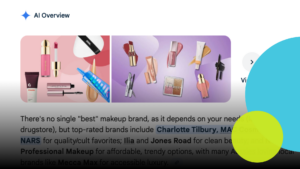
AI Overviews, conversational search, and large language models (LLMs) aren’t just changing how people search. They’re changing what visibility means. Today, being “found” often means being summarised, referenced, or silently informing an answer, sometimes without a single click.
Search is no longer only about blue links and traffic. It’s about whether your brand shows up in the answers people trust. And that’s where most traditional SEO strategies quietly fall short.
At MNO, we’ve been adapting to this shift by rethinking search from the ground up, moving beyond just rankings and toward AI-led visibility that’s built on clarity, authority, and usefulness.
What AI Overviews & LLMs Actually Look For
There’s a lot of noise around AI search optimisation, and most of the time it gets overly technical. In practice, the systems powering AI Overviews and LLM prioritise:Clear topical authority
AI doesn’t want one-off blog posts. It’s trying to work out who the real leaders are on a topic. Brands that consistently talk about the same subject, from multiple angles and with real depth, are far more likely to be shown in AI answers.Structured, readable content
AI favours content that’s easy to follow. Pages with clear headings, simple explanations, and logical flow are much easier for AI to understand and reuse. Messy content doesn’t confuse AI, it simply gets skipped.Consistent brand signals
AI looks for a clear, consistent story. Brands that reinforce the same message across their website and content are easier to trust and more likely to appear in AI answers. First-hand expertise AI isn’t impressed by recycled content. What gets rewarded is real insight, lived experience, and ideas that actually come from the work. If it sounds like it could’ve been written by anyone, it won’t stand out.Complete answers
AI prefers complete answers. If your content only half-answers a question, it’s unlikely to be used. Content that fully explains the topic and anticipates the next question, is far more likely to be referenced. This is why traditional SEO alone, especially when focused on volume and keyword coverage, no longer delivers the same returns. Publishing lots of keyword-focused content might still get pages indexed, but AI search prioritises content it actually understands and trusts.How We’re Helping Brands Get Seen: The MNO Approach
At MNO, we don’t treat AI Overviews optimisation or LLM search visibility as an add-on. We treat it as an evolution of brand strategy, content strategy, and SEO working together. Here’s how that shows up in practice.Designing content for answers, not just keywords
We start with real questions people are asking, and how those questions are being answered in AI search today. That means considering “What keyword do we want to rank for?” and “What does a complete, credible answer actually look like?”Building authority through topic depth
Instead of chasing endless blog ideas, we help brands build topic clusters that clearly signal expertise. Each piece of content reinforces the others, creating a body of work that AI systems, and most importantly, humans can trust.Structuring pages for AI readability
Clear H2s and H3s, concise explanations, summary sections, and FAQ-style clarity all matter. This makes content genuinely easier to understand and reuse. In fact, you’d struggle to find a page on an MNO optimised website that doesn’t feature an FA section.Aligning SEO, brand positioning, and content depth
AI-driven search rewards brands that know who they are and what they stand for. We work with brands to make that message clear and align technical SEO, messaging, and thought leadership. This allows the brand to show up consistently, no matter how or where it’s queried.Prioritising expertise-led content over volume
More content is not better content. We help brands publish less, but say more. Depth, clarity, and authority consistently outperform surface-level output in AI search results.How to Optimise for AI Overviews & LLMs (Without Chasing the Algorithm)
If there’s one mistake we see brands making, it’s trying to “optimise” for AI the same way they once optimised for rankings. If you follow these steps you’ll have a better chance of being noticed:Start with structure and clarity
If your content is hard to follow, it’s hard to summarise. Clear headings, logical flow, and explicit explanations make a measurable difference in how AI systems interpret your content.Write answer-first
Lead with the answer, then unpack it. This mirrors how AI Overviews present information and increases the likelihood your content informs those summaries.Sharpen your positioning
Brands that appear in AI answers usually have a clear point of view. Vague positioning produces vague visibility. Strong positioning travels further.Invest in authoritative long-form content
Depth matters. Long-form content that explores a topic fully (without fluff) creates the strongest AI visibility signals over time.Maintain consistency across owned channels
Your website, blog, and other owned content should reinforce the same expertise and narrative. AI systems reward coherence. Think of this less as “SEO for AI Overviews” and more as making your content undeniably useful, at scale.What This Looks Like in Practice
Imagine a brand that’s historically relied on short, keyword-driven blogs to capture search traffic. The content performs adequately, but it’s generic, fragmented, and easily replicated. Now imagine that same brand shifts its approach. Instead of publishing dozens of surface-level posts, it creates a small number of deeply structured, authoritative guides. Each piece clearly explains the topic, addresses common misconceptions, and provides practical insight drawn from real experience. Over time, something changes. Those pages start appearing in AI Overviews, not always as a clickable result, but as a referenced source. Prospects mention “seeing the brand everywhere.” Inbound enquiries become more informed, more qualified, and more aligned. The traffic volume may not spike overnight. But the quality of visibility improves dramatically. That’s how brands move from being a result to being a source.MNO’s Take on the Future of Search Marketing
We see AI visibility as a natural extension of strong brand and content strategy, not a replacement for the fundamentals. We’re cautious about chasing every new feature, but decisive about adapting where behaviour has clearly changed. Right now, that means helping brands become genuinely useful sources of information, because that’s what AI systems surface. What can wait? Tool obsession, speculative hacks, and performative “AI optimisation.” What can’t? Clarity, authority, and intent-driven content.Frequently Asked Questions: AI Overviews, LLMs & Search Visibility
What are AI Overviews in search?
AI Overviews are AI-generated summaries that appear directly in search results. Instead of listing links, they synthesise information from multiple trusted sources to answer a question immediately. For brands, visibility now means being referenced or informing those summaries, not just ranking below them.
Is traditional SEO still relevant with AI search?
Yes, but it’s no longer sufficient on its own. Traditional SEO helps content get indexed, but AI search visibility depends on understanding and trust. Brands need to move beyond keyword coverage and focus on clarity, authority, and completeness.
What is LLM search visibility?
LLM search visibility refers to how often and how accurately large language models reference, summarise, or draw from a brand’s content when generating answers. This includes AI chat interfaces, AI-assisted search, and conversational discovery tools.
How is optimising for AI Overviews different from traditional SEO?
Traditional SEO focuses on rankings and traffic. Optimising for AI Overviews focuses on being a reliable source. That means answer-first content, strong structure, consistent positioning, and depth rather than volume.
Does AI search reduce website traffic?
In some cases, yes. AI search can answer questions without a click. But brands that appear in AI answers often see higher-quality inbound traffic, stronger brand recall, and better-qualified leads. Visibility shifts from quantity to quality.
How long does it take to see results from AI search optimisation?
AI visibility builds over time. As content depth, consistency, and authority compound, brands begin to appear more frequently in AI summaries and references. It’s a strategic shift, not a quick win.
Rethinking What It Means to Be Visible
Being visible today isn’t just about being found. It’s about being trusted enough to be referenced, summarised, and relied upon.
As marketers and brand leaders, the question worth asking isn’t “Are we ranking?”
It’s “If an AI had to explain what we do, would it get it right?”
That’s the lens we use at MNO, and the one we encourage brands to adopt as search continues to evolve.
If you’re rethinking how your content shows up in AI-led search, or questioning whether your brand is designed to be found or to be understood, that’s a conversation worth having.