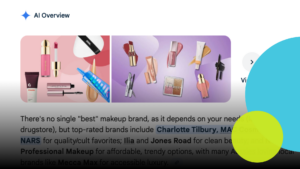



Today, your website sits at the intersection of AI discovery, trust-building, and instant decision-making. It’s where people validate what they’ve already seen on social, confirm what AI search tools have summarised, and decide (often in minutes) whether you’re credible, relevant, and worth engaging with.
From what we’re seeing at MNO, many brands aren’t underperforming online because of a lack of traffic. They’re underperforming because their websites aren’t doing the real work anymore. They look fine. They function. But they don’t reduce friction, answer real questions, or actively support conversion.
This article isn’t about design trends or shiny features. It’s about the fundamentals that high-performing brands are getting right, and why those fundamentals matter more than ever.
Clear, Search-Led FAQs That Actually Answer Questions
FAQs have quietly become one of the most powerful sections on a modern website, and one of the most misused.
In 2026, FAQs aren’t filler content or an afterthought buried at the bottom of a page. They’re a direct response to how people search, how AI surfaces information, and how buyers reduce uncertainty before taking action.
High-performing websites use FAQs to do three things well:
- Answer real, high-intent questions people are already asking
- Remove objections before a sales conversation even begins
- Signal authority and clarity to both users and AI search systems
The strongest FAQ sections we’re seeing are structured, specific, and written from lived experience. They reflect real objections and hesitations, real confusion, and real decision points, and they answer them clearly. That clarity improves SEO visibility, supports AI-ready websites, and helps users move forward with confidence.
Intelligent Chatbots That Drive Real Leads Not Just Automation
Chatbots had a novelty phase. That phase is over.
In 2026, the difference between a chatbot that converts and one that gets ignored is intent. Automation for its own sake doesn’t work. Conversation that reduces friction does.
We’ve seen this first-hand. Recently, MNO launched intelligent chatbots for two different clients. Within one week, both received direct, qualified leads through chatbot conversations alone. No forms. No delays. Just immediate, relevant engagement at the exact moment of intent.
It worked because the chatbot wasn’t trying to “do everything.” It was designed to:
- Capture intent quickly
- Ask the right qualifying questions
- Route users toward a clear next step without pressure
Effective chatbots should feel less like tech and more like guidance. They respect the user’s time, adapt to their readiness, and remove unnecessary barriers to action. That’s what makes them a genuine conversion tool, not a gimmick.
Strong Trust Signals Everywhere, Not Just the Homepage
Trust isn’t built in one section of a website. It’s built in layers.
One of the most common gaps we see on underperforming websites is over-reliance on a single “trust zone”, usually the homepage or a testimonials page. In reality, trust needs to be reinforced everywhere, especially where decisions are being made.
High-converting websites in 2026 integrate trust signals contextually:
- Testimonials placed next to relevant services or claims
- Social proof that explains outcomes, not just praise (videos, photos that bring words to life)
- Clear positioning that helps the right people recognise themselves and signals to everyone else that this isn’t for them.
- Consistent language, tone, and messaging across every page
People don’t read websites linearly anymore. They skim, jump, and scan. Trust needs to meet them wherever they land.
Content Designed for AI and Humans
AI has changed how content is discovered, but it hasn’t changed why people read.
The best content strategies we’re seeing in 2026 are designed for both AI visibility and human decision-making. That means:
- Clear, descriptive headings with real intent
- Answer-first content that doesn’t bury the point
- Long-form pages that demonstrate depth and authority
- Summaries and structure that help people navigate quickly
This isn’t about keyword stuffing or gaming algorithms. It’s about making your expertise obvious. AI surfaces content that’s clear, credible, and genuinely helpful. Humans trust brands that explain things well and don’t waste their time.
When content helps people decide, not just browse, it becomes a conversion asset, not just a traffic driver.
Fast, Frictionless User Experience
Design trends come and go. Friction is forever.
In 2026, speed, clarity, and ease of use matter more than visual novelty. High-performing websites focus on:
- Fast load times across all devices
- Simple navigation with clear pathways
- Fewer clicks between interest and action
- Intentional CTAs that feel placed, not forced
UX is no longer just a design consideration. It’s a trust signal. A slow, confusing, or cluttered website creates doubt, whether consciously or not. The smoother the experience, the more confident users feel moving forward.
Clear Next Steps That Feel Like Guidance, Not Pressure
Pushy CTAs are underperforming in 2026. Not because people don’t want direction, but because they want the right direction.
The strongest conversion-focused web design we’re seeing uses CTAs that align with intent. Instead of pushing everyone toward the same action, high-performing sites offer multiple entry points based on readiness:
- Learn more
- Explore options
- Get clarity
- Start a conversation
When CTAs feel like guidance, people engage. When they feel like pressure, people bounce. The difference comes down to empathy and understanding where the user actually is in their decision-making process.
What We’re Seeing as a Marketing Agency
Working directly with brands across industries, a few patterns are impossible to ignore.
Underperforming websites often suffer from the same issues:
- Too much emphasis on aesthetics, not enough on clarity
- Content that talks at users instead of helping them decide
- Missing or weak trust signals beyond the homepage
- Friction-heavy paths to conversion
High-performing websites, on the other hand, consistently:
- Reduce uncertainty at every stage
- Answer real questions clearly and confidently
- Integrate trust, UX, and conversion strategy into every page
- Treat the website as an active sales and education tool
Many brands don’t realise their website is the bottleneck, until everything else has to work harder to compensate.
Frequently Asked Questions: Website Strategy in 2026
Why are so many websites underperforming even with strong traffic?
How important is AI optimisation for websites in 2026?
Do FAQs really help with SEO and conversions?
What role does UX play in website conversions today?
How can I tell if my website is the bottleneck in my marketing?
What should brands focus on first when improving their website strategy?
The Best Websites in 2026 Work Harder Than Ever
Websites are no longer passive brand assets. In 2026, they’re doing more heavy lifting than ever, supporting AI discovery, building trust at speed, and guiding people toward confident decisions.
The brands winning online aren’t chasing trends. They’re doubling down on clarity, adaptability, and user-first strategy.
If there’s one takeaway, it’s this: the question isn’t whether your website looks good. It’s whether it’s designed for how people actually behave now.
If you’re reassessing how your website supports trust, AI visibility, and conversion, that’s exactly the conversation we’re having with brands every day.